Our Pale Blue Dot
BY HANNAH WRIGHT, RHIANNON JAMES & Roland HArwood

Image credit: NASA (via Unsplash)
“Business as usual means normalising catastrophe; homes destroyed by flood and wildfire in Britain, price shocks, food shortages and a destabilised economy. We are drowning in fossil-fuel misinformation, and it is no accident.” Those words from Mike Berners-Lee set the tone at yesterday’s National Emergency Briefing in London.
The facts were stark: extreme weather events cost the economy $2 trillion over the last decade; the UK has seen three of the five worst cereal harvests on record this decade; and the cost of living, food security and national stability are all being shaped by a rapidly warming world.
Hannah Wright, Rhiannon James, and Roland Harwood 🌍 from the Liminal community joined 500 participants, including politicians, scientists, business leaders, national media and campaigners, all carrying the same uneasy truth: this is no longer a future threat. It’s an emergency; here and now.
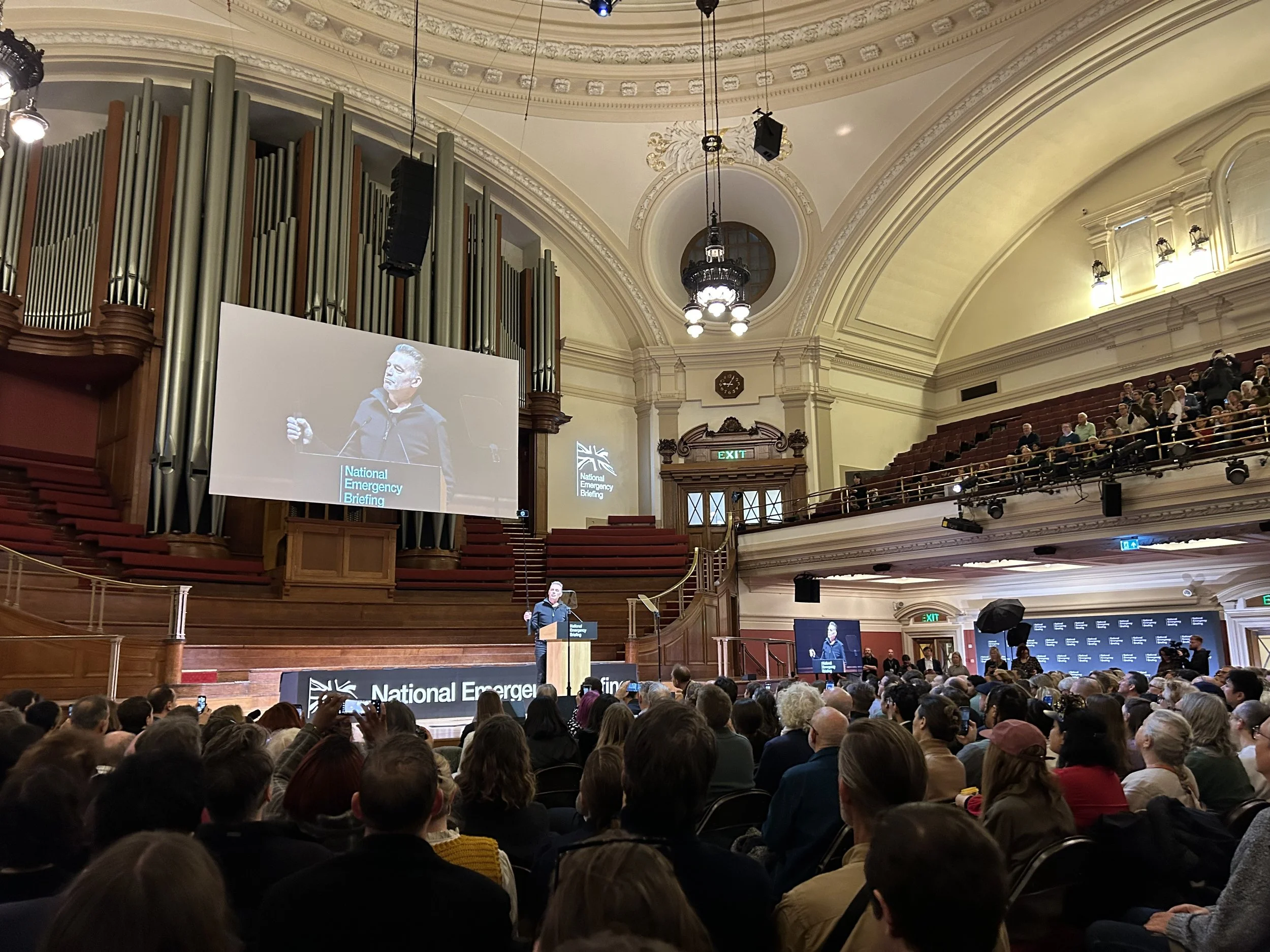
Chris Packham holding his phone with an image of earth from space.
What resonated most was the honesty presented to us, and that was demanded of us. All of the speakers urged us, in different ways, to wake up and reset the national conversation, arguing that hope is not passive optimism but a discipline rooted in confronting the facts and acting decisively.
Hugh Montgomery OBE made the health crisis painfully clear, calling climate change an emergency and “the greatest threat to human health of the 21st century,” and reminding us that preventative action, from tackling obesity to insulating homes, saves lives and money.
Professor Tim Lenton OBE warned of accelerating tipping points, those moments where gradual change becomes irreversible: the collapse of the Amazon, the weakening of the Atlantic Circulation (AMOC), the knock-on effects for our climate, crops and coastlines. “We are running an increasing risk of these tipping points,” he said. “Including this critical one for the UK.”
And yet throughout the briefing, one message repeated: we have the solutions. They are here, they work, and scaling them is a political and economic choice, not a technological one.
“Britain has led before, and we must lead again - not with words, but with action to protect our people, our prosperity and our children’s future.”
Angela Francis spoke plainly about the risks of inaction, pointing to Ørsted’s transformation from an oil and gas company to a global offshore wind leader as proof that rapid change is both possible and profitable. “Fast action is cheaper, more secure, and more prosperous for everyone.”
Nature, too, was framed as essential national infrastructure, alongside transport, energy and housing. Professor Nathalie Seddon highlighted that the UK sits in the bottom 10% globally for biodiversity, yet the decline is entirely within our power to reverse. “Failing to act,” she warned, “would be a betrayal of our children and future generations.”
Food security expert Professor Paul Behrens reminded us that climate stress is already reshaping harvests, prices and nutrition, sharing statistics that highlight the UK’s vulnerability to future food crises. The solutions: shifting to healthier, plant-rich diets and resilient food systems could save both land and billions in health costs.
Lieutenant General Richard Nugee CB CVO CBE brought the national security implications into sharp relief. Climate change, he said, is a “threat multiplier,” amplifying instability and exposing the fragility of our food and energy systems, displacement of people threatening our existing national boundaries, he notes, paraphrasing Alfred Henry Lewis’ quote “there are only nine meals between mankind and anarchy.”
And yet amid the gravity, there was a steady current of possibility.
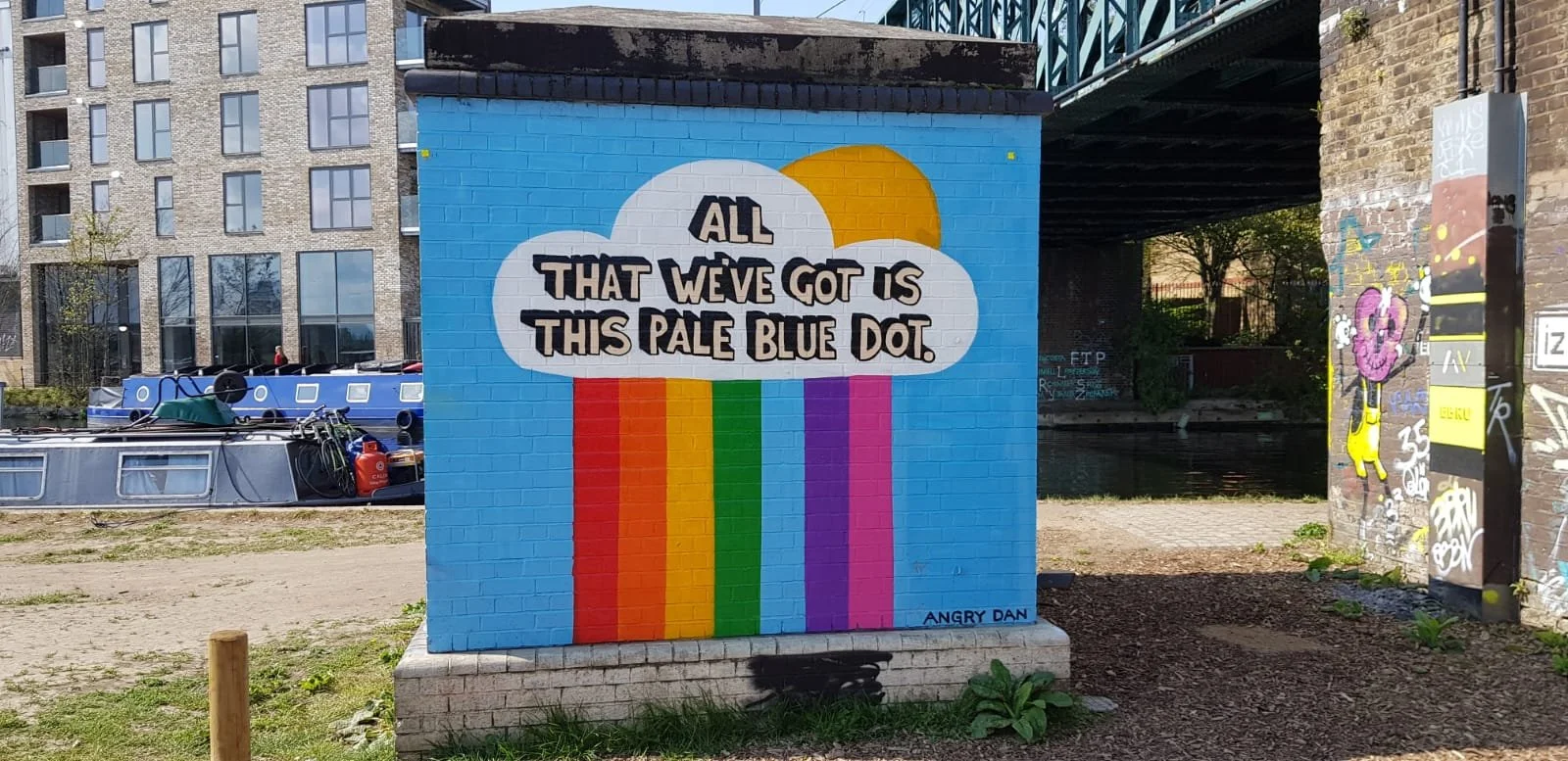
Image credit: Angry Dan
Tessa Khan reminded the room that renewables are now cheaper and more reliable than fossil fuels, with offshore wind costs halving over the past decade. “The transition offers good jobs and a safer, cleaner, more secure energy system, if we choose it.”
What gave us most hope, though, is that many of the solutions the speakers called for are already happening in communities across the UK, such as the projects and places funded by Innovate UK's Net Zero Living Programme for which we are convening the community of practice with 59 towns and cities.
Across the country, local authorities and innovators are already proving that climate action isn’t abstract - it’s practical, scalable and improving people’s lives today:
Retrofitting homes street by street, cutting bills, emissions and health inequalities while creating skilled local jobs.
Building only net-zero homes - healthy, high-performing places designed for the future rather than yesterday’s energy system.
Rolling out low-cost, reliable public transport that connects towns, rural areas and people who have long been underserved.
Expanding EV charging networks for rural communities, closing the urban-rural divide and making clean transport accessible to everyone.
Electrifying local energy systems so neighbourhoods can generate and share clean power, boosting resilience and reducing dependence on volatile fossil fuels.
Embedding biodiversity initiatives and projects to support nature conservation across urban and rural areas.
These aren’t theoretical. They’re happening now, and where they scale, we succeed together. New research has shown that the net zero transition will deliver at least £164bn in benefits to the UK alone.
Leaving the event, we felt both the weight of the crisis and the energy of possibility. The National Emergency Briefing, the brainchild of Simon Oldridge and Nick Oldridge, was a clarion call for honesty, courage and collective action that transcends any political party agenda.
“Hope is a discipline. You have power. Use it.”
And perhaps that is the real message: the solutions are here. The question is whether we choose to scale them and, if so, at what pace.
Because in the end, all we’ve got is this pale blue dot. 🌍
___
Please sign the letter of support and get involved here: www.nebriefing.org